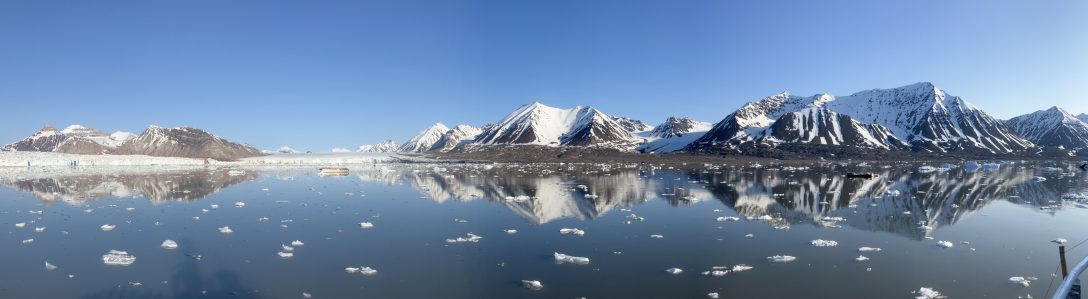

It was widely predicted in local and international media that this month’s parliamentary elections in Kalaallit Nunaat / Greenland would be the most widely watched in the island’s history, given the unwelcome spotlight placed on Nuuk after incoming US President Donald Trump not only returned to his hapless 2019 proposal to ‘purchase’ Greenland from Denmark, but also intensified his rhetoric. In speeches and his social media posts since the beginning of this year, he refused to rule out of the use of force in acquiring the island, and vowing during his recent speech to a joint session of the US Congress that ‘one way or the other, we’re going to get it’.
Trump also made vague claims that Greenland as US territory would be essential for ‘national security’, despite the fact that the American military already maintains a military facility at Pituffik with extensive monitoring capabilities. At times, the affair has veered into outright absurdity, with one example being a sycophantic bill introduced in Congress last month which would ‘authorise’ the President to enter into negotiations to acquire Greenland, and to also rename it ‘Red, White, and Blueland’.
Although on the eve of the 11 March Greenlandic election Trump appeared to soften his rhetoric, praising the vote but also promising that Greenland could become ‘RICH!’ if it agreed to be transferred to American sovereignty, the damage had more than been done. The renewal of the ‘buy Greenland’ fiasco has placed further strains on Washington’s relationship with Denmark, a NATO ally. Coupled with Trump’s increasing vitriol towards the government and economy of Canada, culminating in an erratic acceleration of the bilateral trade war this month, (which is now being called the ‘dumbest’ ever example of such a conflict), Arctic diplomacy and security, including via the NATO alliances, is now being placed in much greater doubt at a fraught time.
The delicate issue of Greenland’s independence from Denmark was also pushed into the forefront at a time when the legacies of Danish colonialism, which officially ended in the 1950s, were still affecting Greenlandic society. These issues included ongoing revelations surrounding an IUD policy in Greenland from the 1960s-70s, and the release (and subsequent removal) of a controversial documentary ‘Greenland’s White Gold’ / ‘Orsugiak – Grønlands hvide guld’ which detailed the appropriation of funds from the island by Danish cryolite mining in the century leading up the late 1980s.
The now-outgoing previous government coalition in Denmark, the once-unlikely alliance between two previous big party rivals, the centre-left Siumut (‘Forward’) and the left-green Inuit Ataqatigiit (IA – ‘Community of the People’) had the thankless job of trying to respond to this resurgence of American pressure, and it was widely expected that one of both parties would not fare as well in the vote. Outgoing Greenlandic Prime Minister Múte Bourup Egede has repeatedly stressed that the sale of Greenland was a non-starter, including saying that ‘We don’t want to be Americans, nor Danes; We are Kalaallit.’
Siumut had been dealing with internal party divisions long before the election was called, but then had to address, in the runup to the election, with high-profile defections from prominent party members to Naleraq (‘Point of Orientation’), a main opposition party which supports both faster-track independence from Denmark and a greater foreign policy alignment with the United States. Siumut’s chair, Erik Jensen, had called for an activation of Article 21 of the 2009 Greenland Self-Rule Act, which would jump-start the independence process, but that move did not appear to heal party rifts over the issue.

Naleraq, headed by Pele Broberg, had appeared to be positioning itself to be the potential kingmaker after this election, fielding 62 candidates, more than any other party, to vie for seats in the Inatsisartut (Parliament). Thirty-one seats were up for contention, and traditionally it has been difficult for a single party to govern alone, so there was also much initial speculation as to what sort of coalition may appear after the results were confirmed.
Initial vote results did appear to suggest a commanding lead for Naleraq, with IA appearing to suffer the biggest losses. As the day progressed, however, the numbers began to shift, steadily favouring another opposition party, Demokraatit (‘Democrats’). At the end of the counting, Demokraatit had gathered the most votes, almost thirty percent (obtaining ten seats), with Naleraq finishing second at 24.5% (eight seats), and IA third at just over twenty-one percent (seven seats).
Siumut’s seat count was reduced to four, and after the results were confirmed, Erik Jensen announced that he would be stepping down as chair with former foreign minister Vivian Motzfeldt named as his successor. The chair of Demokraatit, Jens-Frederik Nielsen, confirmed after the vote that he was open to coalition talks with any of the other parties, with a stress on political unity after what has been a stressful few months for the island. Coalition talks have continued, with discussions reported between Demokraatit and all of the other parties. On 13 March, all parties released a joint statement opposing ‘the repeated statements about annexation and control of Greenland.’
Demokraatit had experienced a political shift of its own before this election, as it had previous been based on a policy of maintaining the union with Denmark. Then the party’s views gradually shifted to support for independence but in a more measured fashion which would place emphasis on achieving self-determination, including first completing the process of transferring government portfolios from Copenhagen to Nuuk, and a more diverse and robust economy. The party’s platform stresses a combination of social liberalism and fiscal conservativism, with a focus on lower taxes and business promotion but also improving housing, education and family support.
As the largest party in the next government coalition, there will be numerous economic questions ahead facing Demokraatit, including policies involving the ongoing reform of the seafood sector, the question of mining and fossil fuels, which IA was sceptical of on environmental grounds, and emerging industries such as tourism.
These issues likely resonated with the electorate despite the long shadow cast by the American drama. As well, another contributing factor to the results could have been exhaustion with the chaos of American foreign policy since January, and a greater backlash against populism, which is helping the political fortunes of some centrist parties in Europe, and potentially in Canada as well.
As Ottawa prepares for an election on 28 April, Mark Carney was elected earlier this month as Liberal Party chief, replacing Justin Trudeau. The Liberals are currently experiencing an unlikely comeback in the polls, now running even with the opposition Conservatives under Pierre Poilievre, mainly out of concern for who the best leader would be to stand up to Trump.

In addition to the economic and domestic policy directions of the next Greenlandic government, what will also be closely watched how the thorny subject of an independence timetable will be addressed. This could likely be a major area of contention should Naleraq join, but either way there are likely to be changes in the relationship with Greenland and a rethinking of US relations, especially as pressure from the Trump administration resumes. Last week saw demonstrations in Greenland’s cities protesting the actions of the American government and reinforcing the fact that a majority of Greenlanders had no interest in becoming US territory, saying Naammaqaaq! (Enough!).
The pushback does not appear to have fazed Washington, as this week, a sudden announcement was made that the US government would shortly be sending another high-level delegation to Greenland. Framed as a ‘private visit,’ amongst the arrivals would be Second Lady Usha Vance, Energy Secretary Chris Wright, and, traveling separately, US National Security Advisor Michael Waltz.
The timing of this event was criticised by Greenlandic officials, especially since negotiations to from the next coalition government in Nuuk are ongoing, and that the addition of such a high-level security official to the tour was a telling sign that the Trump government was continuing to wave off objections by Greenlanders to this attempted annexation.
On the eve of the announcement of the latest US delegation, Prime Minister Egede expressed frustration both at the visit, which he saw as American intimidation and that ‘the signal is not to be misunderstood’, and at the tepid responses from Greenland’s neighbours. He called for improved cooperation amongst the Greenlandic government to resist this pressure, and for Greenland’s allies to be more vocal in standing up to American actions. This view was echoed in a recent comment in the Norwegian news service Dagsavisen that Oslo and other Nordic governments needed to do more to show their support for Greenland and their rejection of ongoing US bombast. All of these matters are highly likely to affect the shaping of the next government in Nuuk, and its policy priorities going forward.
[Addendum – 26 March 2025: After an announcement was made yesterday that American Vice-President JD Vance would also be traveling to Greenland, it was then reported that the entire US delegation would no longer travel to Nuuk and Sisimiut as previously planned, and instead the visit would be limited to the US Pituffik Space Base.]

 Over the Circle