During the opening statements by former Icelandic President Ólafur Ragnar Grímsson at the Arctic Circle Forum in Rome last month, he remarked that the delegation from the United Arab Emirates which had been scheduled to participate in the conference’s deliberations had to cancel due to the closure of airports in the country and in the surrounding Gulf Region, (a similar situation had affected the delegation from India).
The start of the US-Israel war with Iran in late February resulted in Iranian missile and drone attacks on several of its neighbours, including the UAE, as well as the closure and interdiction of ships in the nearby Strait of Hormuz. These events added weight to President Grímsson’s comment that the Arctic is becoming much more difficult to separate from global affairs. However, despite its non-presence at the Rome Forum, this year was shaping up to be a watershed one for the UAE at it continued to pursue policies to become an Arctic, and overall polar, stakeholder. This month, another step in that direction was taken when the UAE formally became the 49th and latest member of the 1920 Svalbard Treaty. (also known as the Spitsbergen Treaty).
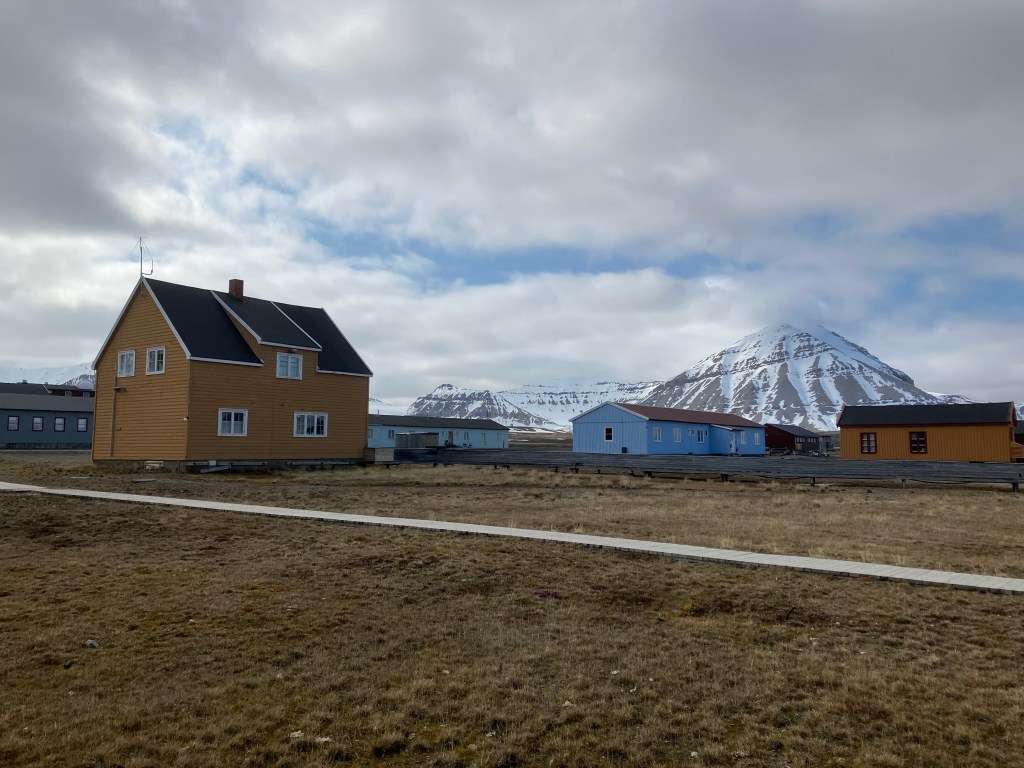
This admission had been advertised via the country’s ‘Federal Decree No.125/2025’, which called for the UAE to accede to the Treaty, and was framed as a major contribution to the advancement of the country’s polar sciences agenda, as well as setting the stage for the its scientists to commence activities in Ny-Ålesund, the main research community in Svalbard itself. The initial announcement by the Emirates Polar Program also described the decision as being consistent with the Emirates’ interests in promoting science diplomacy and contributing to vital work surrounding the causes and effects of polar climate change.
The UAE government had approved joining the Arctic Council as an observer in October 2024, (however this would be as an ad hoc observer, given that the last ‘designated’ observer in the Council was Switzerland in 2017, and geopolitical events since then have hampered the admission of other non-Arctic states).
As a Treaty signatory, the UAE is entitled to conduct scientific research in Svalbard, and other states in Asia have established research facilities, including China, India, Japan and South Korea, in Ny-Ålesund. Fellow Gulf Region state Saudi Arabia joined the Treaty in 1925 (as the Kingdom of Hejaz and Nejd). Signatories are also granted commercial rights in Svalbard, but thus far only Norway and Russia have engaged in economic activities on the archipelago.
Although the Emirates are a relative newcomer to Arctic affairs, including in relation to other major Asian players in the far north including China, India, and Japan, the UAE has nonetheless increased its status in the Arctic using various types of Track II / sub-governmental diplomacy, as well as linking its polar interests to its domestic-level green transition policies.
Despite being a major global oil producer, the UAE government has been pursuing a more diversified and carbon-neutral energy policy in the hopes of developing a ‘circular economy’ featuring sustainable infrastructure, transportation and production. The UAE government’s ‘Green Agenda – 2030’ platform was established as an environmental initiative designed to further promote sustainability and reduction of carbon emissions while also improving production and the country’s annual GDP. The vulnerabilities of the UAE’s fossil fuel-based economic were only further underscored by the Strait of Hormuz’s closure, which reportedly resulted in a halving of the Emirates’ daily oil output last month.
A major example was the January 2023 Arctic Circle Forum in Abu Dhabi which was held at the same time as the city’s Sustainability Week events. The event highlighted the UAE’s interests in promoting research into the Third Pole concept, meaning the climate conditions in the Himalaya region and their relevance to wider polar studies, as well as the roles of collaboration amongst non-Arctic states and science diplomacy.
The keynote address at the Abu Dhabi Forum was given by Dr Sultan Al Jaber, UAE Minister of Industry and Advanced Technology, Special Envoy for Climate Change, and Director and CEO of Abu Dhabi’s national oil firm, ADNOC, and the chair of Masdar, a firm specialising in renewable energy and ‘green hydrogen’ development. The UAE government was also active at the 2023 Arctic Circle Assembly in Reykjavík, and unveiled further specifics of its Polar Program touted as the first such initiative in the Arab World, at the Arctic Circle’s New Delhi Forum in 2025. As with other non-Arctic states, the UAE is seeking to make use of Track II both to advertise its Arctic credentials, and to further establish diplomatic and educational links with both Arctic and outside actors.
In addition to conferences, the country’s Polar Program had established a research centre was established at Khalifa University in Abu Dhabi to develop partnerships and enhance scientific capabilities. In August 2024, Khalifa University signed a memorandum of understanding with UiT- The Arctic University of Norway with the intention of fostering collaboration in climate change and green technology studies relevant to the Arctic.
The Emirates’ expansion of its Arctic policy footprint has taken place in tandem with its increased interests in Antarctica. In 2024, the UAE acceded to the Antarctic Treaty System (ATS), under ‘Federal Decree No.165’ of that year, a move designed to encourage research into how climate change is affecting the South Pole, as well as a precursor to a physical research presence in Antarctica. Plans had been announced late last year for an Antarctica station capable of housing fifty personnel, as well as a dedicated polar research vessel. Early last year, specialists from the UAE’s National Centre of Meteorology, in collaboration with the Bulgarian Institute of Polar Research, conducted the Emirates’ first Antarctic expedition.
Separating polar research from far northern geopolitics will be a challenge to the UAE, along similar lines as other non-Arctic states seeking to engage the region. The Emirates have adapted a de facto neutrality policy towards Russia. The Emirates have been active in attempts at mediation between Moscow and Kyiv, but had also declined to join other countries in curtailing Russian oil trade, and has improved overall economic relations with Moscow.
In January 2024, the United Arab Emirates officially joined the BRICS group, which includes Russia along with China, India, Indonesia and Iran. This in keeping with the UAE’s interests in becoming a more non-aligned hub for trade and finance. As a 2024 article explained, the country is seeking to compartmentalise its foreign policy, including that which involves great power engagement, and this strategy can readily be seen in the Arctic.
Two years ago, Moscow floated the idea of a BRICS+ Research base at the Russian settlement of Pyramiden, separate from the Ny-Ålesund facilities, but little concrete details have emerged since then, and it remains vague whether any other BRICS members, including the UAE, are interested in such an endeavour. The initial announcement by the Emirati government on the Svalbard Treaty membership suggested that instead the country may instead pursue a research presence at Ny-Ålesund proper.
The political, economic and environmental situation in the Gulf Region will likely be in flux for the short term, as the aftereffects of the Iran conflict continue, but the expansion of the UAE’s interests in the Arctic suggests that the country will continue to look at the Arctic (and Antarctica) as important components of its expanding foreign interests.

 Over the Circle