Arctic Realpolitik: Germany’s Northern Strategies in a Time of Turning Points

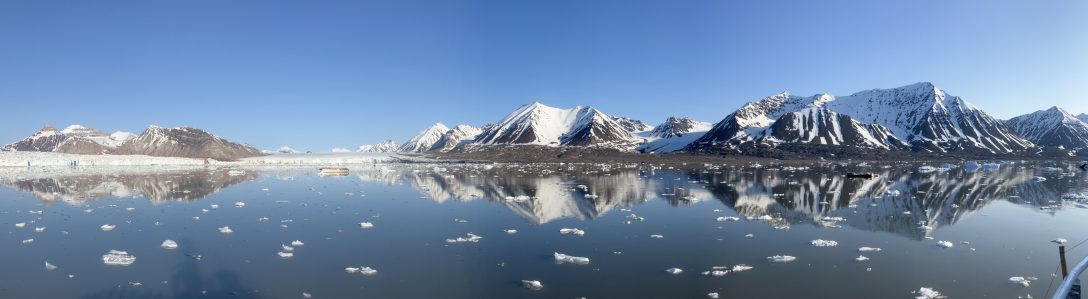
[Photo by Marc Lanteigne]

by Marc Lanteigne

For Germany, debates about the evolution of the country’s foreign and security policies are hardly new, and the ‘modern’ era of those deliberations can readily be traced to the end of the cold war in Europe, and the completion of German reunification in 1991. Since then, there have been numerous Wendepunkte (turning points) in Germany’s European and international policies. However, as with the rest of Europe, and indeed the entire Euro-Atlantic region, the full Russian invasion of Ukraine in February 2022 had been widely seen in Germany as the start, or at least a start, of the ‘post-post-cold war’ era in the region. 

After decades of concentrating on economic and political cooperation as the vanguard of German foreign affairs, then-incoming Chancellor Olaf Scholz announced in the wake of Moscow’s aggression that there would be a stronger focus on bolstering German security. This would later include a stronger commitment to NATO, with the protection of the alliance’s eastern borders, military assistance for Kyiv, and reaching the Alliance’s spending target of two percent of GDP in February of this year. 

Where the Arctic fits into Germany’s strategic concerns was illustrated earlier this month with the publication of the country’s latest White Paper on the far north, ‘Germany’s Arctic Policy Guidelines: Germany and the Arctic in the Context of the Climate Crisis and the Zeitenwende’ (German: Leitlinien deutscher Arktispolitik: Deutschland und die Arktis im Kontext von Klimakrise und Zeidenwende). 

Zeitenwende is likely to become another example of a German word which is difficult to directly translate into English but nonetheless enters mainstream discourses. Meaning literally ‘times-turn’, the word more specifically refers to an historic turning point. Chancellor Scholz used the term in his February 2022 speech, and since that time the word has dominated discussions about the directions in which German international concerns should turn. 

Germany has a long history of polar engagement, and was one of the first observer governments in the Arctic Council, signing on in 1998, only two years after the group was formed. The country also co-maintains a research station (AWIPEV), with France, via the Alfred Wegener Institute, in Ny-Ålesund, Svalbard. As with other observers, Germany’s activities in the Arctic were dominated by scientific inquiry, including on matters related to local climate change. The two previous Arctic policy documents published by the German government, in 2013 and then in 2018-19, detailed the country’s commitments to addressing climate change, developing scientific and research expertise in the far north, as well as fostering stronger regional cooperation both via the Council and the European Union

Mention of security in the 2013 paper was light, including a call for the Arctic to be used for peaceful purposes only. The 2018 document did go further in that area, however, by noting the environmental changes in the Arctic which were leading to greater possibility of competition for resources and access to regional sea lanes. In other words, promoting ‘non cooperative behaviour’ by some governments, which were not named. That paper also stressed its opposition to the militarization of the Arctic, while also calling for ‘quiet zones’ in the region with restrictions on human activity. 

At that time, this document was an outlier, as other like government policy papers by non-Arctic states tended to eschew direct mention of local security concerns in favour of detailing support for environmental, scientific, and developmental cooperation.

(Japan’s 2015 Arctic policy document was also somewhat of an anomaly at the time, as the far north was specifically cited in that paper as a matter of national security. This inclusion reflected Japan’s status as a maritime state, with distinct sensitivities over whether emerging Arctic sea routes would be subject to military interdiction). 

Chancellor of Germany Olaf Scholz, 19 June 2023 [Photo via NATO]

As relations between the West and Russia deteriorated since the release of the 2018 paper, debates over the hardening of Arctic security, and potential German responses, soon emerged. The 2024 Arctic policy paper cemented this shift in thinking by directly identifying Russia as having ‘fundamentally changed the geopolitical environment of Germany’s Arctic policy’, upending regional exceptionalism, and challenging regimes and laws. While the two previous papers placed the challenges of climate change in the Arctic first, this new policy document left no doubt that climate change and military threats were assuming equal importance in German Arctic strategies. 

Reflecting shifts in thinking within NATO itself, Germany no longer sees the Arctic as being on Europe’s strategic periphery. Instead, the far north is perceived as an area of geopolitical contestation by Russia as well as China, with concerns expressed in the new document about the possibilities and consequences of closer northern cooperation by both powers.

The ‘international rules-based order’ in the Arctic was portrayed as a framework which needs urgent defending via Germany efforts with NATO and the EU, in addition to the United Nations and its relevant agencies such as the International Maritime Organisation and the UN Convention on the Law of the Sea (UNCLOS). Acknowledging that the Council is facing a considerable slowdown in its efforts due to the distanced relationship between Russia and the ‘seven like-minded Arctic states’ (all of which are now NATO members), the 2024 paper called for deeper German engagement within the Council, and a strengthening of regional cooperation initiatives. 

From an environmental viewpoint, the document describes links between Arctic security and the issue of ‘resilience’, including the need to maintain local environmental regimes and to combat specific threats not limited to methane emissions, black carbon deposits, and sea ice erosion. Human security both within the Arctic and in adjacent regions such as continental Europe were also viewed as being affected by altered Arctic weather patterns, links which were also elucidated in the German government’s June 2023 National Security Strategy. Applying German research capabilities to addressing these challenges in the Arctic was also a major theme [video] of the Arctic Circle’s Berlin forum in May this year. 

Germany will be heading into an election next year, and it is likely that much of the debate will be centred on domestic issues such as economic uncertainty, immigration debates, and voter discontent leading to a lurch to the right in recent state elections. However, the upcoming vote will likely also include much debate about Germany’s strategic concerns, reflecting the country’s moves away from a traditional ‘civilian power’ (Zivilmacht) stance which had prioritised multilateralism, the promotion of democracy and civil society, and positive change through trade, and towards a foreign policy more closely aligned with the Atlantic security environment. The Arctic, and its own geopolitical changes, are now being acknowledged in German government circles as a part of this new turning point. 

Icebreaker Chess? A New Polar Shipbuilding Deal Amongst NATO Members

US Coast Guard icebreaker Healy docked in Tromsø, Norway, October 2023 [Photo by Marc Lanteigne]

By Marc Lanteigne

As the Arctic Ocean faces ongoing warming and the breakup of the far north’s ice cap, access to the region, and to its resources, have become a greater concern for Arctic and non-Arctic governments. Ice erosion in the Arctic is shaping up to a halting process at best, as underscored by a study published this month about conditions in Canada’s Northwest Passage which suggested that local ice breakup would make the waterway less, not more, navigable in the near future as older sea ice drifts southwards, strengthening maritime chokepoints in the region and hampering shipping. Russia meanwhile has continued to promote its Northern Sea Route as an alternative maritime trade conduit between Asia and Europe, but progress has been slow due to post-2022 political roadblocks and questions over the predictability of ice conditions there. 

Icebreaking vessels capable of operating in far northern waters have therefore continued to be subjects of political debate, as climate change continues to affect the Arctic and tensions between the West and Russia have the potential to spill over into the region. At the recently-concluded NATO summit in Washington, three Arctic governments, Canada, Finland and the United States, announced an ‘Icebreaker Collaboration Effort’. Also known as the ICE Pact, the three allies agreed to share relevant information and expertise with an eye to jointly developing new icebreaking ships, including for purchase by allies, which could operate effectively in the Arctic and Antarctica. A detailed blueprint for this initiative is to be drawn up by the end of 2024.

Finnish President Alexander Stubb and Canadian Prime Minister Justin Trudeau at the 2024 NATO Summit in Washington DC, July 2024 [Photo via NATO]

The ICE Pact, if successful, would also address what the United States had long lamented was an ‘icebreaker gap’ between itself and other major Arctic and non-Arctic governments. Shipyards in all three NATO Arctic countries would have the opportunity to construct icebreaking vessels, and one US firm, Bollinger, swiftly pledged its support for the initiative.

Canada has also been seeking to upgrade its icebreaker fleet at a time when the Justin Trudeau government announced last month that it was preparing a revised government Arctic policy in response to changed environmental and political conditions in the region. Arctic defence was also a strong theme in Ottawa’s latest defence policy [pdf] released in April this year. 

Icebreakers had also played a part in the Donald Trump government’s erratic and often mercurial approach to US Arctic policy. In June 2020, a memorandum was published by the White House which called for the acquisition of a ‘fleet’ of icebreakers, including polar-class security cutters (PSCs), to be in place by 2029. These ships would have eventually replaced the two icebreakers currently operating under the US Coast Guard, the Healy (launched in 1997) and the Polar Star (launched in 1973). As a potential stopgap measure, the Trump government also mooted the idea of leasing icebreakers until the American vessels could be deployed. Since that announcement was made, however, the initiative has been beset by repeated delays and ballooning costs, with estimates suggesting that the USCG would not have even a single new icebreaking vessel before 2029-30, despite initial plans for the first ship to be ready this year. 

The primary anxiety for those arguing about an icebreaker gap in the Arctic has been the steady pace of Russian and Chinese shipbuilding efforts. Russia has over forty icebreakers of various types, including nuclear powered vessels with additional such craft being constructed under Moscow’s ‘Project 22220’ initiative. The latest of these is the Ural, launched in 2022. However, the next Russian nuclear icebreaker, the Yakutia, is reportedly now facing considerable budget strains as it prepares for a planned December 2024 launch. Last month, Russia began trials of its latest icebreaking patrol vessel, the Ivan Papanin, which is expected to be incorporated within the country’s Northern Fleet by the end of this year. 

Since the successful launch of China’s Xuelong 2 / 雪龙2 (Snow Dragon 2) icebreaker in 2018, the country has sought to expand its own polar icebreaker capability as Beijing seeks to jump start its interests in the Polar Regions after a long pause during the global pandemic. Early last year, China’s third icebreaker, the Zhongshan Daxue Jidi / 中山大学极地 (Sun Yatsen University Polarsuccessfully completed a round of sea trials. 

Ice in the East Greenland Sea [Photo by Marc Lanteigne]

Last month, China’s fourth icebreaker, the Jidi / 极地 (Polar) was delivered to the country’s Ministry of Natural Resources, while the research vessel Tansuo Sanhao / 探索三号 (Discovery Three) is under construction (in Chinese) with a planned 2025 completion date. The need for icebreakers to assist in the development of Beijing’s Arctic policies, including expanded scientific research, was detailed in the Chinese government’s landmark 2018 White Paper on the Arctic. Reports had appeared in 2018 that China was also seeking to build an icebreaker with a nuclear engine, (thus far, only Russia has nuclear powered icebreaking ships). However, since the initial announcement, few details regarding logistics or timelines have been made available. 

Both Canada and the United States are facing potentially difficult elections in the near future, and so the specifics and scheduling for the ICE Pact are not set. There are also questions about what the eventual demand for such ships will be in the coming years. However, this announcement has underscored the interest of NATO members in ensuring a stronger presence in the Arctic for strategic as well as scientific reasons. 

Oasis No More? Svalbard and Contested Arctic Strategies

A bust of Roald Amundsen in the centre of the settlement at Ny-Ålesund, Svalbard [Photo by Marc Lanteigne]

by Marc Lanteigne

Although there remains much conventional wisdom which still considers the Arctic to be only loosely situated within international law, and potentially subject to an inevitable competition over influence and resources, like any other body of water the legal framework of the Arctic, (including the United Nations Convention of the Law of the Sea) or UNCLOS, is extensive and robust. That does not, however, grant these frameworks freedom from complete immunity to challenges or reinterpretation. The islands of Svalbard, north of Norway, are fast becoming a case example of a collision between traditional laws and norms on one side, and modern strategic realities on the other. 

The Spitsbergen (Svalbard) Treaty of 1920 recognized the islands as part of the Kingdom of Norway, granting the country sovereignty over the archipelago, but also permitting other Treaty signatories to engage in economic and scientific activities there. Actions taken for ‘warlike purposes’ in Svalbard are forbidden under Article IX of the Treaty, including a ban on naval bases. However, the specifics of that article have been open to interpretation, as according to the Norwegian government the need to protect the sovereignty of the islands necessitates defensive policies and civilian policing, including via the Norwegian Coast Guard. Under this legal structure, during the past century the islands have evolved as a hub for various areas of international civilian research on the Arctic and its environment. 

There are currently forty-six parties to the Treaty, including the United States, China, Russia, Australia, Canada, France, Germany, India, Japan, Poland, South Korea and the United Kingdom. The government of Türkiye (Turkey) agreed [in Turkish] to become a party as of October 2023, although there were previous signs that local media were overestimating the rights the country had to access resources on the islands, given Norway’s right to regulate economic activities on environmental grounds. North Korea became an unlikely signatory in 2016. 

Roughly every decade, of late, the Norwegian government has published a White Paper on Svalbard policy, with the previous document released in 2016. Much has changed, however, in the realm of Arctic security over the past eight years. The deteriorated relations between Russia and the West since the full Russian invasion of Ukraine began in early 2022, the expansion of NATO into the Arctic with the membership of Finland and Sweden, and the slowdown of Arctic Council activities in light of the precarious state of communications with Moscow, have all contributed to concerns about the ‘return’ of hard power politics and zero-sum games in the far north. Thus, the publication of the newest Svalbard White Paper last month was sure to draw both national and international scrutiny. 

This revised White Paper [pdf], ‘Meld. St. 26 (2023-2024) – Melding til Stortinget’ (‘Report to Parliament’) acknowledged, without specifics, the changed security milieu surrounding the islands, stating in Section 1.1 that ‘The security policy situation globally and in our immediate area is characterized by greater seriousness and greater unpredictability than when the previous Svalbard report was presented in 2016, and an increased geopolitical tension which originates outside the northern areas are now also felt in local areas.’ 

Accordingly, the overreaching tone of the document was stressing the need for Norway to strengthen its sovereignty over the islands. The main topics cited were improved government control over infrastructure and energy policies (with a focus on developing renewables), the need for population regulation to prevent further local environmental strains, and the wider issues of climate change threats. As the paper was being released, Norway’s Justice and Public Security Minister, Emilie Enger Mehl, commented that ‘the governance of Svalbard must continue to be predictable and maintain a steady course.’ This at a time when predictability is becoming rare coin in the far north. 

Another theme in the latest Svalbard paper which, although seemingly very innocuous, carries a great deal of political weight, is the call for the Norwegian government to exercise greater sovereignty over research activities on the islands. For decades there have been extensive domestic and international research programmes in Svalbard, heavily concentrated in the community of Ny-Ålesund, including via facilities overseen by institutions including those from Britain, France, Germany, Italy and Japan. The Polar Research Institute of China opened [in Chinese] its Yellow River Station [in Chinese] (Huanghe zhan 黄河站) at the site in late 2003, and India’s Himadri Station has been operational since 2008. 

China’s Yellow River Station at Ny-Ålesund, Svalbard [Photo by Marc Lanteigne]
India’s Himadri Station at Ny-Ålesund, Svalbard [Photo by Marc Lanteigne]

Although Arctic research in the physical sciences is permitted by Treaty parties, there have been differences between Oslo and other governments over whether research outside of the physical sciences should be allowed, and these rifts have started to become more pronounced. 

In early 2019, The Norwegian Research Council, which advises the country’s governments on research strategy and planning, published a research strategy [pdf] for Ny-Ålesund. Amongst the plan’s statements was the point, in Section 4, that ‘research is to be within the natural sciences,’ with the one exception being research into local cultural heritage. This statement has since been interpreted in Norway as an informal rule that research at the site is to be restricted to the natural sciences, implying that Norwegian authorities have the right, based on sovereignty rights granted in the Treaty, to interdict social science research. 

This stipulation is only loosely based on the original 1920 Treaty, however. Reflecting the times, Article V in that document affirmed that Treaty parties ‘recognise the utility of establishing an international meteorological station in the territories.’ The Article also stated, ‘Conventions shall also be concluded laying down the conditions under which scientific investigations may be conducted in the said territories.’

Some governments, including those of Russia and China, have been critical of these limitations, and have accused the Norwegian government of overstepping the Treaty by setting what they view as artificial restrictions on research parameters. The Norwegian government, for its part, has sought to better supervise research on Svalbard at a time when many questions regarding the rise of ‘dual use’ data gathering, (i.e. research which could be used for both civilian and military purposes, and also could be used in a manner representing a threat to national interests), are proliferating in security policy circles, including in the Arctic. 

Flag of the Union of Soviet Socialist Republics flying at the Barentsburg settlement in Svalbard
[Photo by Claudia Cheng, UiT – The Arctic University of Norway]

Russian authorities have pushed back on Norway’s stipulations regarding research, and this has been one factor of Moscow’s ongoing complaints that Russia’s legal rights regarding the islands were being curtailed [in Norwegian] by Norway. These differences were only magnified after the 2022 invasion of Ukraine, with one incident taking place in December last year when the Russian government protested restrictions on research activities by a Murmansk-based research vessel, the Dalniye Zelentsy (Дальние Зеленцы) near Svalbard, which resulted in the vessel being barred from the islands’ territorial waters out of concerns that its research could have dual use implications. 

China’s Beijing-based Arctic and Antarctic Administration [in Chinese] (国家海洋局极地考察办公室 Guojia haiyang jujidi kaocha banggongshi) was quick to take exception [in Norwegian] to the de facto ban on social science research at Ny-Ålesund, arguing that this restriction was not compatible with the terms of the 1920 Treaty, especially the preamble which promises an ‘equitable regime’ amongst participating parties. Chinese assertiveness on this matter was seen in Norway as a shift away [in Norwegian] from the country’s more muted approach to Svalbard engagement, and also taking place at a time when Beijing was seeking to expand its own Arctic interests, including by commencing work since 2017 towards constructing a ‘Polar Silk Road’ as the northern tier of Beijing’s Belt and Road economic development initiatives. 

As well, as a 2021 article in the journal Marine Policy explained, China’s development as a great power, and its growing presence in the Arctic, have made the country not only more interested in becoming a regional stakeholder, but also in developing as an overall ‘interpretive power’, with the capability to construe international laws more in line with its own interests. China’s pushing back on Norwegian interpretations of the Spitsbergen Treaty is an example of this. A more recent (September 2024) article in Marine Policy described China’s concerns about Norwegian rule-setting over Svalbard as a reaction to Oslo seeking to ‘improve research coordination’ on the islands. However, contemporary Chinese studies have suggested a more specific set of grievances in Beijing regarding Norwegian Svalbard regulations.

For example, a 2020 article in Pacific Journal (太平洋学报) argued that Norway was using its role as guarantor of Svalbard to restrict activities of other signatories, as well as the tendency of Norway to assume a literal interpretation of the 1920 Treaty which restricts activities of other signatories. The study instead called upon Norway to take an ‘evolutionary approach’ (进化解释 jinhua jieshi) to the Treaty which reflects modern concerns. A 2021 study in the journal Contemporary Law Review (当代法学) called into question whether Norway was using environmental regulations as a way of micromanaging economic policies on Svalbard, as well as using restrictions on scientific activities to disadvantage other parties. All of which were seen by this study as contravening the ‘equitable system’ (公平制度 gongping zhidu) structure promised in the original Treaty. China’s 2018 government White Paper on the Arctic also noted that as a Treaty signatory, the country gained ‘the right under conditions of equality,’ to engage in both research and commercial activities. 

Entrance to the University Centre in Svalbard (UNIS), Longyearbyen [Photo by Marc Lanteigne]

Attempts by the Norwegian government to increase regulation of research activities in Svalbard is not a new phenomenon. Oslo had been concerned about ensuring that it had proper oversight of research on the islands. Article 3.2.6 of the 2016 White Paper stressed that ‘Nationals of the parties to the Treaty have neither a right nor equal right to conduct research activities in the archipelago,’ and that ‘research activities in Svalbard must be conducted in line with relevant Norwegian regulations, including the Svalbard Environmental Protection Act’.

Article 8.2.2 of the document also noted ‘the growing international interest in research in Svalbard contributes to knowledge development in the Arctic. The objective is for this to happen in accordance with Norwegian research policy, which places emphasis on international research and infrastructure cooperation and on open access to data and publications.’ 

The follow-up 2024 paper only doubled down on these regulations, with the report (Article 5.4.1), stating ‘Research activity and educational provision must be based on the natural advantages that Svalbard’s location provides, i.e. that climate, nature and the environment must be focus areas. The activity must be of such a nature that it can only or best be carried out on Svalbard.’ 

The paper’s section on research activities [in Norwegian] confirmed that higher education in the islands would be continue to provided solely by the Norwegian state-owned University Centre in Svalbard (UNIS), which has operated in the capital of Longyearbyen since 1993. As well, the White Paper announced the planned creation of a dedicated Svalbard research office directed by the Norwegian Research Council and the Norwegian Polar Institute in order to facilitate ‘clearer’ research activities on the islands and to provide annual reporting on local research endeavours.

While Norway has been seeking to clarify and assert its rights in Svalbard, since last year Russia has been seeking, as part of its larger plan to develop alternative Arctic partners to potentially open an alternative scientific base at the sparsely populated Russian town of Pyramiden on Svalbard, perhaps as early as the end of 2024 [in Russian], with possible branches elsewhere, including the other main Russian town on Svalbard, Barentsburg.

Moscow has invited its partners within the recently expanded BRICS group to potentially join this project, and it was underscored that education and training would be offered there, thus potentially pushing against Norwegian regulations that UNIS be the sole provider of higher education on the islands, and that disciplines beyond natural sciences could also be studied. 

Russian settlement at Pyramiden [Photo by Marc Lanteigne]

In addition to the original members of the BRICS (Brazil, Russia, India, China, and South Africa), the group added [pdf] new members at the beginning of this year (Egypt, Ethiopia, Iran, the United Arab Emirates, and potentially Saudi Arabia), with other governments such as Malaysia and Thailand now also expressing interest in joining. In mid-June, a BRICS+ working group meeting was held in Murmansk, with scientists from member states discussing [in Russian] maritime and polar research, which could act as a precursor to the Pyramiden plans, and Moscow’s turning towards the BRICS group as an alternative set of regional partners is in keeping with the Vladimir Putin regime’s March 2023 foreign policy concept paper, which included [in Russian] a call for ‘mutually beneficial cooperation with non-Arctic states pursuing a constructive policy towards Russia and interested in international activities in the Arctic.’ 

It is not yet certain which countries will ultimately take part in the Russia research plans from Svalbard, or the eventual timetable for the opening of the facilities. Nonetheless, these potential facilities underscore the fragile nature of the legal and political structures on the islands, and the fact that Svalbard can no longer be as insulated from the growing geopolitical stresses facing the Arctic as it once was. 

‘Can’t Keep My Mind From the Circling Sky’: The Take-off of Arctic Air Routes 

Air Greenland plane at Nuuk Airport [Photo by Marc Lanteigne]

by Marc Lanteigne

It was in 1954, after two years of test flights, when Scandinavian Airline Systems (SAS) successfully began a Copenhagen to Los Angeles route over the north polar region (with stops in Kangerlussuaq, Greenland and Winnipeg), using DC6 aircraft. These trips opened up the possibility of shorter transits between Europe and North America, making use of potential new ‘great circle’ flightpaths closer to the North Pole. In 1983, Finnair, which had begun to expand its business to include Asia travel options, started the first nonstop flights via the Arctic, between Helsinki and Narita Airport in Tokyo.

With improved technology and navigational capabilities, the airspace within the Arctic Circle is being looked at with much interest by aviation businesses, especially as the far north  continues to open to expanded economic activities, including tourism.

At the same time, post-cold war air routes between Europe and Asia, which made frequent use of Russian airspace, have now been closed to numerous Western airlines since the February 2022 invasion of Ukraine, while the United States, Canada, and most of Europe have all banned Russian aircraft from their airspaces. The security situation over the past two years has thus made the Arctic Circle an even more attractive alternative for transcontinental flights. 

For example, since early 2022, Finnair’s Helsinki-Tokyo routes now circumvent Russia, and include flights well into the central Arctic Ocean region, (passengers along that route receive a diploma testifying that they have flown over the North Pole). This northern route takes about thirteen hours to complete, compared with nine to ten hours the pre-2022 flightpath required. 

Finnair’s 2023 ‘Northern Route Diploma’ [Photo by Marc Lanteigne]

There have also been significant changes in the past year which have affected flights to Arctic destinations, responding to both consumer demand as well as closer economic cooperation between far northern governments. In Greenland, the island’s largest airport in Nuuk is currently under expansion, along with an enlargement of its runway. 

This process caused a brief political stir in 2018 when the governments of Denmark and the United States worked to thwart a planned bid by a Beijing-based firm (the China Communications Construction Company, or CCCC), to finance the refurbishment of Nuuk’s airport and others on the island. Denmark would ultimately take the lead in assuming those expenses, prompting a backlash within Greenland’s coalition government at the time. 

The enlargement of Nuuk Airport, as well as the facilities at Ilulissat, will affect the status of the airport at Kangerlussuaq, which has been Greenland’s main transportation hub for many years. The small town was originally the site of the American Sondrestrom Air Force Base before the site was transferred to the government of Greenland in 1992. 

In April 2023, it was confirmed that the Danish military would continue to make use of Kangerlussuaq, and civilian flights would also go there, details had yet to be confirmed. It had been agreed [in Danish] by Copenhagen in Nuuk in September 2019 that the Danish Armed Forces could continue to use Kangerlussuaq. In November this year, an announcement was made that Kangerlussuaq would also be the site of a new Arctic basic training programme for Greenland residents, set to launch in 2024. 

The improved facilities at Nuuk Airport are expected to be fully opened by late 2024, and carrier Air Greenland is planning new routes in anticipation of a growing number of visitors. In October 2023, the airline announced a new summer route between Aalborg and Kangerlussuaq for next year, as well as additional Greenland to Denmark flights. As well, in the wake of new interline agreements announced the same month with Canadian North, Icelandair and SAS, Air Greenland will tap into a wider array of routes connecting Europe and North America. 

The Greenlandic government is hopeful that the updated airports and new routes will bolster the island’s nascent tourism industry as interest in the Arctic continues to grow, as evidenced by the visitor boom in next-door Iceland over the past two decades which was only briefly interrupted by the global pandemic. 

Another Arctic air route announced this past October would be Air Greenland flights during summer months between Nuuk and Iqaluit, Nunavut. This routing had previously been attempted in 2012, at a time when there was still much regional enthusiasm about Greenland being at the centre of an Arctic economic and resource boom, prompted by changed weather conditions and growing demand for raw materials in the region. However, the flights at the time proved to be financially unsustainable, and were suspended in 2015. 

Nuuk Airport [Photo by Marc Lanteigne]

It was hoped, however, that the improved air facilities at Nuuk could help make the Iqaluit run viable, and that a revival of the link could also build upon improved national and local level links between Canada and Greenland, which had included in the long-awaited settlement of the political status of Hans Island / Tartupaluk in June 2022, (resulting in a 1.28km land border between the two nations), and the demarcation of the nearby maritime boundary.

As well, Nuuk and Ottawa had announced last October that they would be working together on projects to conserve the ecosystem of Pikialasorsuaq (North Water Polynya) in the waters separating Greenland and Canada’s Ellesmere and Devon Islands. 

The Iqaluit-Nuuk flights are scheduled to commence, using De Havilland (Canada) Dash-8 planes, in June 2024, with tickets being available next month. Canadian North is also planning flights from Ottawa via Iqaluit to Nuuk from June to October of next year. The challenge now, as then, will be competition with traditional regional airlinks including via Keflavik and Copenhagen. 

The proliferation of new air routes and destinations within the Arctic Circle has become another key factor in the economic opening of the Arctic, as well as political and development cooperation between regional governments. Next year may be a significant one for Arctic travel and its social, financial and economic effects on local communities. 

[The author would like to thank Mikkel Schøler for his comments on an earlier draft of this article.]