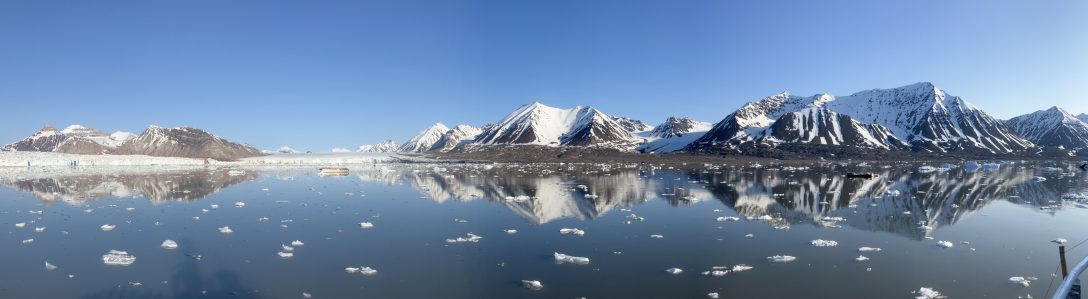
by Marc Lanteigne
‘Assume nothing’ has became the de facto catchphrase to best describe the upcoming parliamentary elections in Canada, to be held on 28 April. Political fortunes of the competing parties have shifted rapidly since the beginning of this year, primarily due to one outstanding factor: the aggressive, (and regressive), foreign policies of the country’s southern neighbour, the United States under Donald Trump. As a result of the America’s president’s continuous calls, including on social media, for Canada to be absorbed by the United States, while simultaneously questioning the legitimacy of two states’ mutual borders, bilateral relations have deteriorated. This has resulted in various pro-Canada campaigns and a recent dramatic fall in Canadian visitor numbers to the US.
Canada has also been a frequent target of the Trump administration’s erratic and unfocused tariff policies, prompting a series of countermeasures by Ottawa. Although US-led global trade tensions have since been readjusted, as Washington turns its sights more fully on China, damage has still been done, and it remains to be seen whether the reformed Canada-US-Mexico trade agreement (CUSMA) can be maintained.
The main effect of Trump’s Canada ‘policies’ has been a swift resurgence of support for Prime Minister Mark Carney and the Liberal Party, which late last year had been written off as unsalvageable due to the unpopularity of Carney’s predecessor, Justin Trudeau. Current polling suggested a Liberal lead of more than five percent over the opposition Conservatives led by Pierre Poilievre. At the same time, support for smaller parties, namely the New Democratic Party (NDP), the Bloc Québécois, and the Green Party, has also dropped in recent weeks.
Both of the two leading parties have proposed programmes to address the challenges faced by the Canadian Arctic, reflecting the longer list of the far north’s security threats not only from Russia, and the possibility of greater Sino-Russian military cooperation, but also to a degree from the Trump government, which has not only questioned Canadian sovereignty but has also made repeated calls for the annexation of Greenland on vague ‘international security’ grounds.
In April of last year, the Trudeau government published the most recent governmental Arctic defence policy, ‘Our North, Strong and Free: A Renewed Vision for Canada’s Defence,’ which received much scrutiny from regional specialists for how the document represented a more diversified set of regional interests, many of which more closely reflected the new geo-strategic realities of the far north.

In December 2024, Global Affairs Canada published its revised Arctic policy statement, a piece which also reflected the cold realism of changed security circumstances in the far north. Canada’s Arctic Foreign Policy described the pillars of Canada’s renewed northern strategies as the need to ‘assert Canada’s sovereignty; advancing Ottawa’s national interests through pragmatic diplomacy; leading on Arctic governance and multilateral challenges; and adopting a more inclusive approach to Arctic diplomacy.’ The statement pointed to ‘major powers that do not share Canadian interests’ as obstacles to peace in the region, and also referred to non-traditional or ‘grey zone’ Arctic threats in the form of malicious cyber activities, interference in local affairs and economic coercion.
This policy paper also advocated the appointment of an Arctic ambassador and the opening of Canadian consulates in Anchorage and Nuuk, while strengthening communications with like-minded Arctic states, another task since made more complicated by the re-election of Donald Trump.
There was also greater space given for engagement with ‘like-minded’ non-Arctic states to participate in regional dialogues and policymaking, including in the North Pacific as Canada seeks to improve relations with Japan and South Korea, two states with their own Arctic interests. This reflected Canadian concerns over China’s long-term goals in the current and the current challenges presented by Beijing’s ‘dual-use’ scientific interests in the Arctic which critics have argued could serve military purposes.
Within the Liberals’ policy document going into the election, promises included an upgrading of vital Arctic infrastructure, such as the Greys Bay Port and Road Project, as part of the revived local economy, as well as a new airstrip. There were also policies of improved cooperation with local actors to better identify regional risks, and a Canada-Europe agreement specifically tied to mutual Arctic interests.
In March of this year, Prime Minister Carney had previous announced a spending package of C$6.7 billion in spending for the Canadian Arctic, which would focus on infrastructure-building and monitoring, with the latter being bolstered by a radar technology purchase from Australia, further reflecting newfound Canadian unease about US cooperation. All of these policies reflected the underscoring by Ottawa that its Arctic sovereignty would not be challenged.

The Conservatives’ updated Arctic policies going into the election got off to a shaky start with a tin-eared posting on X/Twitter last December implying that the appointment of a Canadian Arctic Ambassador was a waste of funding as there was no one to speak to there, save for ‘Santa Claus’. Two months later, Mr Poilievre issued a statement in Iqaluit that his government would seek to open a military facility in the Nunavut capital, as well as bolstering the ranks of the Canadian Rangers in the Arctic and adding two more icebreakers for the Canadian Navy in addition to the ones promised for the country’s Coast Guard.
The previous Conservative government under Stephen Harper had also vowed to develop Arctic military facilities, but the promised base at Nanisivik announced by his government in 2007 remains unfinished and without a confirmed opening date.
Within a September 2023 Conservative policy document were promises of improved consultations with the country’s Arctic territories (Northwest Territories, Nunavut, and Yukon), in preparation for greater economic activities prompted by climate change and demand for regional resources. A call for a strengthening of North American Air Defence (NORAD) in Arctic may also however be adversely affected by the current downturn in US-Canada relations. Mr Poilievre underscored the need for military infrastructure in the Canadian north in the candidates’ English language debate last week, saying that it was only a matter of time before Russian vessels would seek to enter Canadian Arctic waters, and therefore monitoring and response capabilities had to be upgraded.
Within the Canadian Arctic, major issues amongst voters included Indigenous rights, healthcare, socio-economic development, dealing with high prices and housing challenges, and also maintaining regional security and sovereignty. The eventual shape of the Canadian Arctic economy, and who would benefit, was another overarching question going into the final days of the campaigns.

The next government in Ottawa will have a host of Arctic-related challenges to address in the coming months. On 12 May, the chair of the Arctic Council is due to be transferred from Norway to the Kingdom of Denmark, with Greenland taking on a paramount role in the chairship which will last until early 2027.
It had been decided earlier this month that the transfer of the chair would take place completely virtually, sidestepping what could have been an extremely difficult situation based on three factors. The first being the ongoing question of Russia’s downgraded role within the group, in the wake of its illegal 2022 full invasion of Ukraine. The second being the soured relationship between the United States and Canada as well as between Washington and Copenhagen and Nuuk over the Trump government’s land grab policy towards Greenland. The third being the high likelihood that the United States will decline to support any Council initiatives which mention climate change, which is still touted by the current occupant of the White House as fictional, despite mounting evidence to the contrary and it being the central concern in the Arctic.
Other Arctic-related questions facing the next Canadian government includes the future of strategic agreements ranging from NATO and NORAD to the Icebreaker Collaboration Effort, or ‘ICE Pact’, agreement struck between Canada, Finland and the United States in July last year. Since re-assuming office, the Trump government’s icebreaker policy has been mercurial at best, including an odd promise this past February that the US would somehow produce ‘forty’ icebreakers for the American Coast guard, despite a lack of means or infrastructure for doing so. This month, it was reported that the US and Finland may strike a side deal for the American purchase of five Finnish icebreaking vessels, and where Canada might fit into that endeavour was unclear.
After a short (but unusual) election season in Canada, which has greatly galvanised the public thus far, the Arctic will be a major part of local, and regional, scrutiny over the policy directions taken by Ottawa in the coming months.


