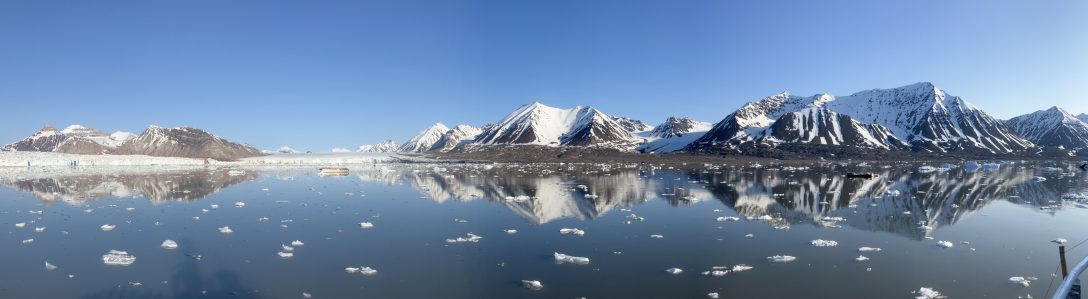
A Sharp Right Turn: The Arctic Faces Trump 2.0

[Photo by Kevin Doyle via Unsplash]

by Marc Lanteigne

Much of the world is now bracing for yet another period of uncertainty and potential chaos in the wake of the election victory of Donald Trump in the United States last week. The incoming president’s previous foreign policy platforms were based on widespread disengagement and at times isolationism, questioning American multilateralism, while habitually praising autocratic leaders and criticising US friends and allies, while promising a more transactional approach to diplomacy. The twice-impeached President-elect’s return is likely to have global effects certain to spill over into the Arctic in many ways. This at time when the far north is facing some its most complex security challenges since the cold war along with the ongoing threat of climate change. 

One of the most visible policy divides between the Democratic and Republican parties has been over climate change policies, especially after Trump became the dominant voice in the latter. Even before becoming a presidential candidate, Trump had derided climate change as a fiction, with efforts to curb carbon emissions framed as being directly against US political and economic interests. During his first term in office, several domestic environmental rules and protocols were overturned, and Trump pulled the United States out of the 2016 Paris Climate Accords. His government essentially derailed the Arctic Council’s now-notorious May 2019 Ministerial meeting in Rovaniemi when the American delegation refused to support any joint declaration which even mentioned climate change. 

President Joe Biden attempted to reverse these policies, bringing the US back to the Paris agreement upon assuming office in 2021, and making climate change one of four pillars in his administration’s Arctic policies announced in October 2022 (along with security, sustainable development and regional and international cooperation), while appointing Dr Michael Sfraga as the country’s first Arctic Ambassador at Large. 

Michael Sfraga, US Arctic Ambassador at Large, speaking at the October 2024 Arctic Circle Assembly, October 2024 [Photo via the Arctic Circle]

However, signs have already appeared that President-elect Trump is again seeking to push forward a denial policy, including once again removing the United States from the Paris agreement, and pursuing a fossil fuel-centred energy policy while downgrading clean energy policies. There are also worries that the incoming government could also pull the US out of the 1992 United Nations Framework Convention on Climate Change (UNFCCC), which would further ostracize Washington from global climate change dialogues and likely also diminish American policy voices in the Arctic. These possibilities may affect the dialogue about to begin this week at the COP29 environmental conference in Baku, which is expected to concentrate on climate finance matters, namely the allocation of funds for developing countries to address environmental threats. 

Alaska, which voted solidly for Trump in this election, is likely to be another environmental front line, especially oil and gas drilling. After the first Trump government sought to open up protected areas in the Arctic National Wildlife Refuge to fossil fuel extraction. Last week, the Biden administration started taking steps to ‘Trump-proof’ the refuge by complicating any attempts by the next government to open up drilling projects there. 

The future of NATO under a Trump presidency is now clouded, given the incoming leader’s history of antipathy towards the alliance and the preference of some within his inner circle to downgrade Europe as an American security priority in favour of the Asia-Pacific. Trump had even weighed the possibility of the United States leaving NATO altogether, an option which may return despite attempts by the US Congress to set up a legal firewall against such a possibility.

In February this year, Trump in a speech openly called for Russia ‘to do whatever the hell they want’ to any NATO member seen as lagging behind on increases to national defence spending. This year, six out of the seven NATO states in the Arctic have spent more than the preferred two percent of GDP minimum. Canada is the exception at about 1.34%, and with the Justin Trudeau government calling for the country to reach the two percent threshold only in 2032, a stance sure to raise ire with the incoming US administration. 

Ukrainian President Volodymyr Zelenskyy meets NATO Secretary General Mark Rutte in Brussels, October 2024 [Photo via NATO]

A related concern is how the incoming Trump government will shift policies towards the Russian invasion of Ukraine. As a candidate, Trump had vowed that he could end the conflict within twenty-four hours. Critics have worried that this would mean a peace deal which would validate Russian land seizures and possibly keep Ukraine out of NATO and thus perpetually vulnerable to future attacks, especially since Trump has consistently refused to openly condemn the Putin regime for seeking to annex Ukraine. There have also been suggestions that the incoming US government may ease sanctions on Russian Arctic liquified natural gas (LNG) projects. Even if the new administration does not follow through on its threat to leave the alliance, trans-Atlantic relations are likely to become more brittle, at the time when NATO is starting to pay much closer attention to Arctic regional threats. 

During the first Trump government, the US sought a more unilateral Arctic policy which dismissed environmental concerns and placed emphasis on assuring great regional security and American economic interests. The results were mixed at best, starting with the tragicomic proposal in 2019 by the Trump government that the US should outright purchase the island of Kalaallit Nunaat – Greenland from the Kingdom of Denmark, which would have been in contravention of the 2009 Greenland Self Government Act, especially Section 21(1) – ‘Decisions regarding Greenland’s independence shall be taken by the people of Greenland.’ That affair further illustrated both the transactional and low information aspects of the first Trump administration. 

The American Corner at Ilisimatusarfik – University of Greenland, Nuuk [Photo by Marc Lanteigne]

Under Trump, the long-muted disagreement between Ottawa and Washington over the legal status of the Northwest Passage spilled into the open during the Rovaniemi meeting, and there is now the possibility of that dispute again complicating cross-border relations. The Trudeau government is finalising a revised Arctic policy for publication by next month, which would include the naming of a new Canadian Arctic Ambassador. 

The icebreaker debate is likely to be revived under the new administration, as well as a resumption of the at best erratic approach to the issue seen during the previous Trump government. In 2020, a memo released by the Trump government included orders for a ‘fleet’ of new icebreakers be in place by 2029. Thus far, no new icebreakers have been deployed, and of the two polar-capable ice vessels the US Coast Guard currently operates, the heavy icebreaker Polar Star was commissioned in the early 1970s, and the Healy had to undergo extensive repairs before resuming its work this October. 

The nuclear-powered Russian icebreaker Chukotka, November 2024 [Photo via Wikipedia]

Last July, the Biden government endeavoured to address this shortcoming, and promote greater cross-border Arctic cooperation, by cosigning the Icebreaker Collaboration Effort, also known as the ICE Pact, with the governments of Canada and Finland to jointly build icebreakers for their use as well as potentially for sale to other regional allies. Balance of power was very much one goal in mind as Moscow continues to develop its own icebreaker fleet, with Russia’s newest nuclear-powered icebreaking ship, Chukotka (Чукотка) launching last week, and China’s fourth icebreaker, the Jidi (极地) / Polar Region, was completed in June of this year. Whether this agreement will withstand a Trump presidency’s derision for multilateral cooperation, especially in strategic matters, is an open question. 

As the Rovaniemi summit illustrated, the incoming Trump government’s relationship with the Arctic Council may also be precarious. In 2025, the chair of the group will rotate from Norway to Denmark, (with debates ongoing as to what degree Greenland should participate), with the Russia question likely hovering over those proceedings. Russia engagement with the Council has been limited since early 2022, and reports surfacing last month that Russian climate change data was being purposefully withheld from elsewhere in the region has been a direct knock on the Council’s main mandate to promote far north environmental protection.

Meanwhile, since its full invasion of Ukraine two years ago, Russia has been more open to closer Arctic cooperation with ChinaIndia, and potentially other fellow members of the expanded BRICS group. American disengagement from the Council could place the group in a much weaker position, both in terms of its abilities to address Arctic environmental challenges and to act as a town hall for regional summitry. 

There are still many uncertainties as to what degree the incoming US president’s bombastic and often undiplomatic rhetoric will ultimately become policy next year. Based on Trump’s previous tenure, the next term could nonetheless spell a difficult time for the Arctic, on several fronts. How the region, and not just its governments, will respond is a crucial question which will soon need to be answered. 

Icebreaker Chess? A New Polar Shipbuilding Deal Amongst NATO Members

US Coast Guard icebreaker Healy docked in Tromsø, Norway, October 2023 [Photo by Marc Lanteigne]

By Marc Lanteigne

As the Arctic Ocean faces ongoing warming and the breakup of the far north’s ice cap, access to the region, and to its resources, have become a greater concern for Arctic and non-Arctic governments. Ice erosion in the Arctic is shaping up to a halting process at best, as underscored by a study published this month about conditions in Canada’s Northwest Passage which suggested that local ice breakup would make the waterway less, not more, navigable in the near future as older sea ice drifts southwards, strengthening maritime chokepoints in the region and hampering shipping. Russia meanwhile has continued to promote its Northern Sea Route as an alternative maritime trade conduit between Asia and Europe, but progress has been slow due to post-2022 political roadblocks and questions over the predictability of ice conditions there. 

Icebreaking vessels capable of operating in far northern waters have therefore continued to be subjects of political debate, as climate change continues to affect the Arctic and tensions between the West and Russia have the potential to spill over into the region. At the recently-concluded NATO summit in Washington, three Arctic governments, Canada, Finland and the United States, announced an ‘Icebreaker Collaboration Effort’. Also known as the ICE Pact, the three allies agreed to share relevant information and expertise with an eye to jointly developing new icebreaking ships, including for purchase by allies, which could operate effectively in the Arctic and Antarctica. A detailed blueprint for this initiative is to be drawn up by the end of 2024.

Finnish President Alexander Stubb and Canadian Prime Minister Justin Trudeau at the 2024 NATO Summit in Washington DC, July 2024 [Photo via NATO]

The ICE Pact, if successful, would also address what the United States had long lamented was an ‘icebreaker gap’ between itself and other major Arctic and non-Arctic governments. Shipyards in all three NATO Arctic countries would have the opportunity to construct icebreaking vessels, and one US firm, Bollinger, swiftly pledged its support for the initiative.

Canada has also been seeking to upgrade its icebreaker fleet at a time when the Justin Trudeau government announced last month that it was preparing a revised government Arctic policy in response to changed environmental and political conditions in the region. Arctic defence was also a strong theme in Ottawa’s latest defence policy [pdf] released in April this year. 

Icebreakers had also played a part in the Donald Trump government’s erratic and often mercurial approach to US Arctic policy. In June 2020, a memorandum was published by the White House which called for the acquisition of a ‘fleet’ of icebreakers, including polar-class security cutters (PSCs), to be in place by 2029. These ships would have eventually replaced the two icebreakers currently operating under the US Coast Guard, the Healy (launched in 1997) and the Polar Star (launched in 1973). As a potential stopgap measure, the Trump government also mooted the idea of leasing icebreakers until the American vessels could be deployed. Since that announcement was made, however, the initiative has been beset by repeated delays and ballooning costs, with estimates suggesting that the USCG would not have even a single new icebreaking vessel before 2029-30, despite initial plans for the first ship to be ready this year. 

The primary anxiety for those arguing about an icebreaker gap in the Arctic has been the steady pace of Russian and Chinese shipbuilding efforts. Russia has over forty icebreakers of various types, including nuclear powered vessels with additional such craft being constructed under Moscow’s ‘Project 22220’ initiative. The latest of these is the Ural, launched in 2022. However, the next Russian nuclear icebreaker, the Yakutia, is reportedly now facing considerable budget strains as it prepares for a planned December 2024 launch. Last month, Russia began trials of its latest icebreaking patrol vessel, the Ivan Papanin, which is expected to be incorporated within the country’s Northern Fleet by the end of this year. 

Since the successful launch of China’s Xuelong 2 / 雪龙2 (Snow Dragon 2) icebreaker in 2018, the country has sought to expand its own polar icebreaker capability as Beijing seeks to jump start its interests in the Polar Regions after a long pause during the global pandemic. Early last year, China’s third icebreaker, the Zhongshan Daxue Jidi / 中山大学极地 (Sun Yatsen University Polarsuccessfully completed a round of sea trials. 

Ice in the East Greenland Sea [Photo by Marc Lanteigne]

Last month, China’s fourth icebreaker, the Jidi / 极地 (Polar) was delivered to the country’s Ministry of Natural Resources, while the research vessel Tansuo Sanhao / 探索三号 (Discovery Three) is under construction (in Chinese) with a planned 2025 completion date. The need for icebreakers to assist in the development of Beijing’s Arctic policies, including expanded scientific research, was detailed in the Chinese government’s landmark 2018 White Paper on the Arctic. Reports had appeared in 2018 that China was also seeking to build an icebreaker with a nuclear engine, (thus far, only Russia has nuclear powered icebreaking ships). However, since the initial announcement, few details regarding logistics or timelines have been made available. 

Both Canada and the United States are facing potentially difficult elections in the near future, and so the specifics and scheduling for the ICE Pact are not set. There are also questions about what the eventual demand for such ships will be in the coming years. However, this announcement has underscored the interest of NATO members in ensuring a stronger presence in the Arctic for strategic as well as scientific reasons.