
by Mingming Shi
1) Iceland’s news service Morgunblaðið reported a large increase of reports received last year by the Icelandic government’s cybersecurity team, CERT-IS. Most of these incidents involved ‘phishing’ (using fake credentials to illegally obtain sensitive information, including credit card details and passwords). Compared to traditional scamming emails, these new scams were more personal and crafty. To cope with this challenge, the Ministry of Justice has convened a new session on digital reporting and portal knowledge on anti-cybercrime on the main police website.
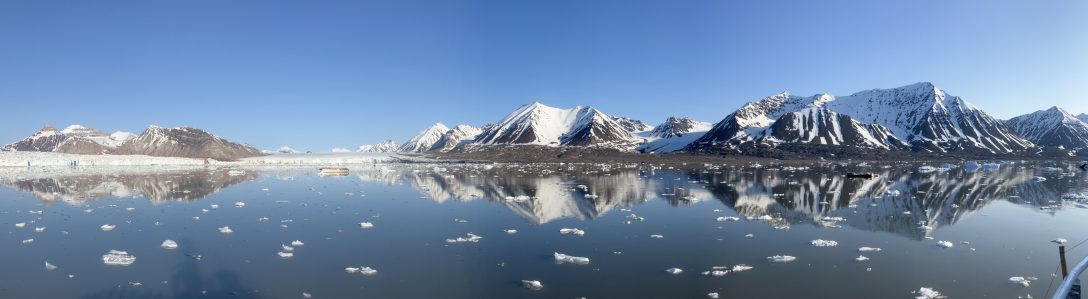
2) CBC has reported that over thirty subglacial lakes have been detected and mapped in the Canadian Arctic. A subglacial lake is a body of water trapped beneath ice, and these have been identified in both the Arctic and Antarctica. Continuous research on the sources of the water which form a subglacial lake, and its drainage under certain conditions, contributes to a sharpening of understanding of climate change, and how sea level changes due to melting glaciers.
3) As Arctic Today reported, a group of experts on reconciliation commissions and scholars from across Nordic countries gathered in Copenhagen, the capital of Denmark, to hold a forum on their work on reconciliation with Sámi peoples and other regional ethnic minority communities. Progress has been achieved, including reviews of, and reflections on, past assimilation policies, and now ensuring that voices of Indigenous peoples are better heard. However, there were acknowledged challenges, such as language barriers, in implementing actions for reconciliation, politically and operationally.
4) A proposal has been adopted by the Parliament of Greenland (Inatsisartut) to prioritise English and Greenlandic education, as reported by the Danish Broadcasting Corporation, (DR). It is mandatory for the Greenland Government to formulate such a plan in the near future, via this proposal. Kalaallisut (Greenlandic) is the official language in this autonomous island, with English also widely used. However, Danish has been the primary language in Greenlandic society, including at schools. Promoting the status of English has been a decades-long ongoing debate in Greenland.
5) Despite the loss of puffins and and other Arctic seabirds at a scale of thousands earlier this year, due to severe weather on migratory routes from mainland Europe, along with insufficient food supplies, puffins have still managed to migrate successfully to Iceland, mainly to Grímsey Island, the northernmost part, and Borgarfjöður on the East. According to RÚV, this inspiring news has been confirmed by Nature Research Center of South Iceland (Náttúrustofu Suðurlands) and the centre also reported that the arrival of the birds was at around the similar time of previous years.


