Shortly after the start of the 2026 Arctic Circle Assembly in Reykjavík earlier this month, it was announced that the conference had broken previous attendance records, with over 2500 attendees from seventy different countries. The increased numbers however could not mask the fact that the event also illustrated the different, and frequently diverging, concepts, perceptions and policies of the far north. In some cases, the divisions were distinct, as while the main conference was underway, a separate Business Forum was also held, with an emphasis on the financial opportunities being created in the extractive industries, shipping, fishing, tourism and infrastructure sectors, as well as in defence and opportunities linked to the ‘blue economy’. As the event continued, however, other more subtle but still quite visible separations could be seen between many different ‘Arctics’.
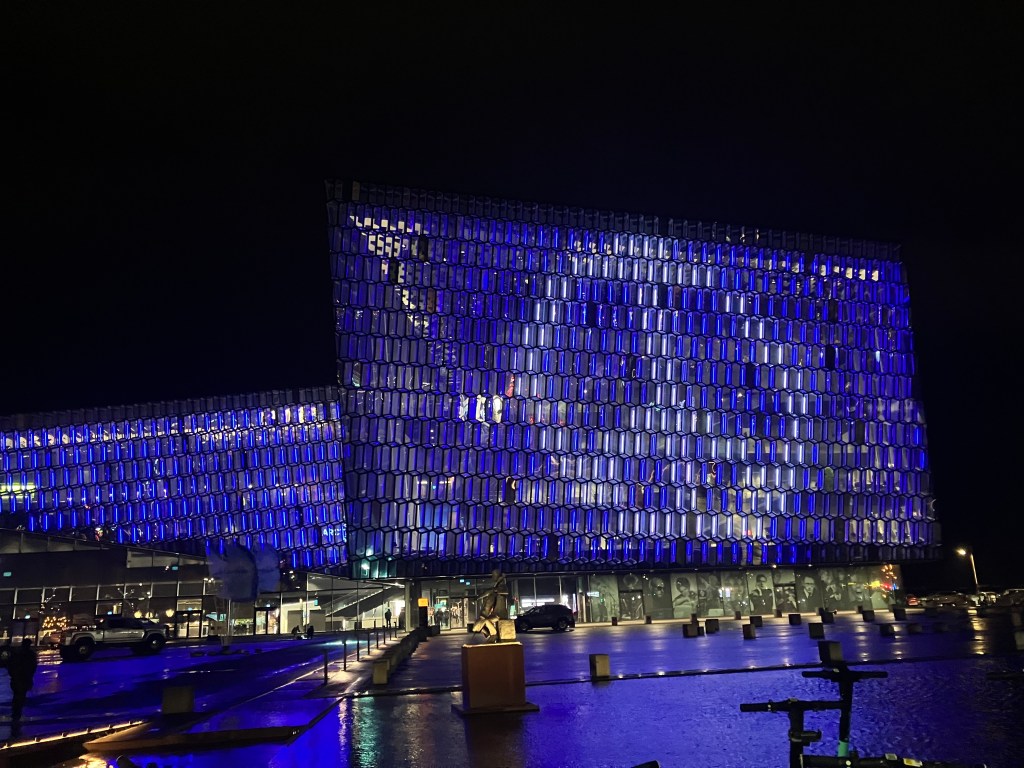
First amongst these were dialogues surrounding great power politics in the far north. Representatives from both the United States and China made considerable impressions on the event this year, as they sought to explain their respective views on the current state of the Arctic and the ideal trajectory of the region. As has been the case since 2022, there was no official Russian representation at this year’s ACA. However, Russian Arctic policies, the war with Ukraine, and the question of whether the far north could be an emerging arena for conflict between Moscow and NATO, were never far from the discussions in panel sessions and in the labyrinthine halls of the Harpa conference centre.
As one of the returning keynote speakers, Admiral Giuseppe Cavo Dragone, Chair of NATO’s Military Committee, explained, the Arctic was likely approaching a turning point both politically and environmentally, and that the three great powers, China, Russia and the United States, had ‘different interests and different priorities’. He also added that the European Union was preparing to publish its latest Arctic policy paper later in the autumn, the first such major statement since 2021. The EU’s Arctic policy had experienced a setback in August this year when Iceland referendum voters opted to reject the restarting of membership talks with the Union by a small margin (52.8% versus 47.2%), but the organisation was showing no signs of losing interest in the far north.

With the Arctic becoming ever more contested, the Admiral concluded there was the need to connect national expertise and capabilities with ‘collective strength’ in the north. Yet there was the sense that the sort of strategic consensus required to strengthen collective security in the Arctic was under more direct challenge, especially after the afternoon plenary on the first day of the event. This featured the unlikely double act of Michael Dunlavy, Governor of Alaska, and Thomas Dans, Chair of the US Arctic Research Commission and a prominent figure in the US government’s ill-conceived (and ill-fated) attempt to annex Kalaallit Nunaat – Greenland.
Any lingering doubts that American policy in the Arctic was rapidly diverging from both previous administrations and the United States’ Atlantic partners was further dispelled by this plenary. Their remarks included dodging any direct mention of climate change and its human causes, while suggesting that any warming going on was not the fault of Alaska. Instead, there was much talk from the duo about a hard power approach to describing regional strategies, including the inclusion within the ‘One Big Beautiful Bill’ of more icebreaker construction and the inclusion of the Arctic in the controversial proposed ‘Golden Dome’ anti-missile shield, and creative attempts at cherry picking information, including the Governor’s claim that the start of oil production in Alaska could be directly credited for the rise in life expectancy of Indigenous peoples in the state. There were also occasional examples of condescending attitudes, including towards the people of Greenland, and the uttering of a term, in relation to his ancestry, by Mr Dans which startled and angered many in the audience.
There was also an attempt at alternative narrative building during this plenary, with the Governor describing the importance of Arctic allies to US strategy while glossing over recent tensions with Canada, Denmark, Greenland, Iceland, and ongoing concerns about the American commitment to NATO. Also, how this optimistic view of northern regional cooperation could be reconciled with plans announced by the White House during the week of the ACA to allow Moscow to sell diesel oil to the US and globally, thus providing a ready cash injection to the Russian military and threatening Ukrainian and wider European security, as well as heated remarks from the US president about the ‘indelible stain’ on Norway after he once again was not awarded the Nobel Peace Prize on 9 October, remains an open question.
US government representatives at the conference were often quick to tout the success of the trilateral agreement signed last month between the governments of the United States, Greenland and Denmark, despite the fact that both the Danish and Greenlandic parliaments had yet to ratify the deal, and that there have been some differences between Greenlandic government and opposition over sovereignty guarantees and economic compensation. (Mr Dans, in his remarks, ebulliently referred to the deal as a ‘win-win-win’ and the beginning of ‘a super exciting chapter’).
Moreover, a few days before the conference the current occupant of the White House posted an image of himself in Greenland standing in front of a line of Star-Spangled Banner-waving… penguins. This suggested two things. First, that the status of Greenland may not be completely settled as far as Washington is concerned, and second that the inner sanctum of the current US administration is not particularly interested in basic zoology studies.
A softer tone on US Arctic policy was taken by Alaskan Senator Lisa Murkowski, who was more open about the local effects of climate change, including forest fires and storms become more commonplace. This as Russia, next door, continues to threaten peace in the region. As she described it, ‘I’ve been thinking about the Arctic not just as a frontier, but really as an early warning system, and if we pay attention, we can detect its signals and risks.’
Days after the conference ended, there was an additional social media post which appeared to suggest that the US was planning immanent large-scale mining and oil-drilling operations in Greenland, a claim questioned In Nuuk.
China’s participation in previous ACAs had been noticeably more muted in recent years, but this conference marked a return to form of sorts, likely in line with two major Chinese Arctic initiatives which have provided a platform for Beijing’s emerging ‘Arctic 2.0’ policies. The first was the recently-concluded Sixteenth Arctic Expedition by the country, which involved three icebreakers, the Xuelong 雪龙 (‘Snow Dragon’) and Xuelong 2 雪龙2, and the Jidi 极地 (‘Polar’) with a supporting research vessel, the Tansuo 3 探索3号 (‘Exploration 3’). This mission was based on multidisciplinary research plans, including surveys of the seabed in the Arctic Ocean’s Gakkel Ridge, local climate observations, and the deployment of several different types of buoys designed to measure ice activity and water temperatures, as well as sea current patterns. Some of the buoys were dropped by long-distance drones, a new addition to Chinese research operations in the north, to improve survey ranges.
Secondly, the announcement by the Chinese firm Sea Legend (海杰航运) that it was seeking to open up regularised cargo shipping along the Northern Sea Route (NSR) connecting Northern Europe with Northeast Asia. Despite much initial fanfare, stretching back well over a decade, that Chinese and Russian interests would see to develop the NSR as a secondary sea lane for maritime shipping, progress was slowed both by the global pandemic and the geopolitical effects of Russia’s full invasion of Ukraine in 2022. However, the voyage of Sea Legend’s cargo ship Dubai Tower (迪拜塔号) from Ningbo to Northern England during August-September of this year was the strongest signal yet that Beijing was seeking a reset of its Arctic shipping plans.
Sea Legend had made the ambitious promise of hitting the ‘accelerator key’ and planning for at least eight annual transits, as it sought to contribute to the development of the ‘China-Europe Arctic Express’ (中欧北极快航) transit route, which has been getting more attention in light of international concerns about the vulnerability of other maritime chokepoints, such as the Strait of Hormuz and the Bab Al-Mandab Strait. However, there was no initial indication that another Arctic crossing was scheduled this year, before the NSR’s transit window closed for 2026.
One common theme during presentations by Chinese officials and specialists was the need for the international community to better understand China’s goals in the Arctic. This concern was raised during the keynote speech by Fu Ying, former Vice-Minister of Foreign Affairs under President Hu Jintao between 2010-13. She spoke at length about Chinese history including relations with Europe, the need to focus on cooperation to address mutual regional concerns including climate change, and clear-headedness on regional threats, noting that any given country ‘should not try to achieve security at the cost of insecurity of the other side.’ This amid growing Western scrutiny of the developing northern relationship between China and Russia, including questions about how the Arctic is being used for expanded bilateral trade between the two powers.
Vice-Minister Fu also participated in a fireside chat one-to-one dialogue with the conference’s chair, former Icelandic President Ólafur Ragnar Grímsson. Another point which appeared during a discussion of Sino-American Arctic relations was the need for ‘managing competition while maintaining cooperation’, representing an acknowledgement that there will be regional strategic differences between the two powers in the near term.
Beyond the great powers, other ‘Arctics’ which appeared during the conference included the ‘middlepower Arctic’ and the ‘global Arctic’. The former was highlighted by numerous discussions of how the region’s medium sized states, including Canada and the Nordic region, can continue to share information and insights about the region. Warming diplomatic and economic relations between Ottawa and European capitals, even producing the idea that Canada could become the European Union’s first associate member, have been spurred on largely by the growing mercurial nature of US foreign policy since last year, and last month Ursula von der Layen, President of the European Commission, stated that she viewed the Arctic as a ‘flagship project’ between Canada and the EU.
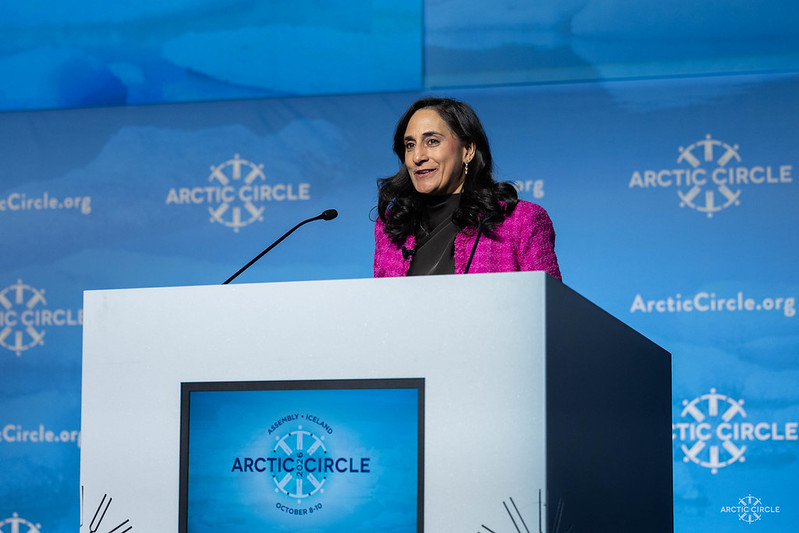
In an opening speech by Canadian Global Affairs Minister Anita Anand, she remarked that the Arctic ‘may be geographically distinct, but it’s no longer strategically distant.’ She called for a holistic approach to the Arctic, featuring cooperation not just in military security, but also the environment and regional development. ‘When I think about Canada’s north’, she said, ‘I don’t begin with a map, a military installation, or a natural resource’, but rather with people, families, youth and culture.
These ideas, including the need to avoid perceiving the Arctic as a mere strategic arena, were echoed by Múte B. Egede, Greenland’s Minister for Foreign Affairs, Business and Raw Materials. He said, nodding to a difficult past and current history, ‘For us, the Arctic is not first and foremost a strategic area. It is not a shipping route. It is not a resource map. It is home.’
One of the cornerstone ideas of the ACA when it was first launched in 2013 was that this institution would be a stage not only for Arctic states and interests but also for non-Arctic states including those well beyond the far north. In previous years, the polar activities of several Arctic states, including Brazil, Britain, Italy, Estonia, Singapore, Switzerland, and the United Arab Emirates were given the spotlight.
For this conference, amongst the major non-Arctic presentations were a speech by the Deputy Minister of Industry and Technology, Türkiye, Muhammet Kasim Gönüllü, who described his country’s developing Arctic scientific interests, (Türkiye joined the Svalbard Treaty in March of last year, and has shown interest in becoming an Arctic Council observer), while adding that ‘meaningful engagement with the Arctic is not defined by geography alone.’ Scientific interests also defined the speech by Senator Musadik Masood Malik, Pakistan’s Federal Minister for Climate Change and Environmental Coordination, who described the serious dangers caused by glacial erosion in the Himalayas.
Amid much talk about how Asia-Pacific actors have begun to develop their own identities in the region, representatives from India, Japan, Singapore and South Korea, the latter also having interests in expanding maritime shipments in the Arctic, also participated extensively in the dialogues. The widening of non-Arctic actors participating at the ACA has echoed growing debates over how the far north is becoming more a global concern even from parts of the world far from the Polar Regions.
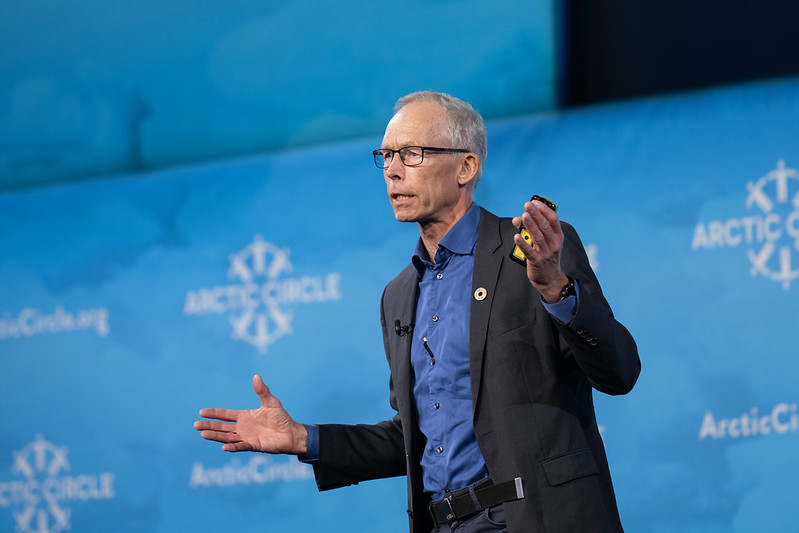
Other Arctic interpretations appeared in various different panels, with a recent addition being presentations on the benefits and risks being posed by artificial intelligence in the far north, part of greater discussions about dual use capabilities of various technologies in the Arctic and concerns about economic dependence. As for climate change itself, a lecture by Johan Rockström, a co-founder of the Planetary Guardians group, and Director of the Potsdam Institute for Climate Impact Research, Germany, gave an alarming overview of the geopolitical implications of changed Arctic weather patterns, the emergence of a large El Niño climate phenomenon, and the potential for a slowdown of the Atlantic Meridional Overturning Circulation (AMOC) ocean current caused by Arctic ice loss, which would be catastrophic for many parts of the world.
As the ACA continues to widen both in participation and in scope, the question of how the many diverse questions surrounding the future of the region can be prevented from descending into a cacophony. There continues to be a push and pull between hard security concerns in the far north, which have taken up more space at the conference over the past five years, and the original environmental, economic and cultural concerns on which the Arctic Circle originally based its foundations. The event may be getting bigger, but in the face of so much uncertainty, is a side effect that the divisions facing the Arctic over policy priorities are being mirrored at this assembly?
Or, to borrow from Latin, ‘tempora si fuerint nubila, solus eris?’


